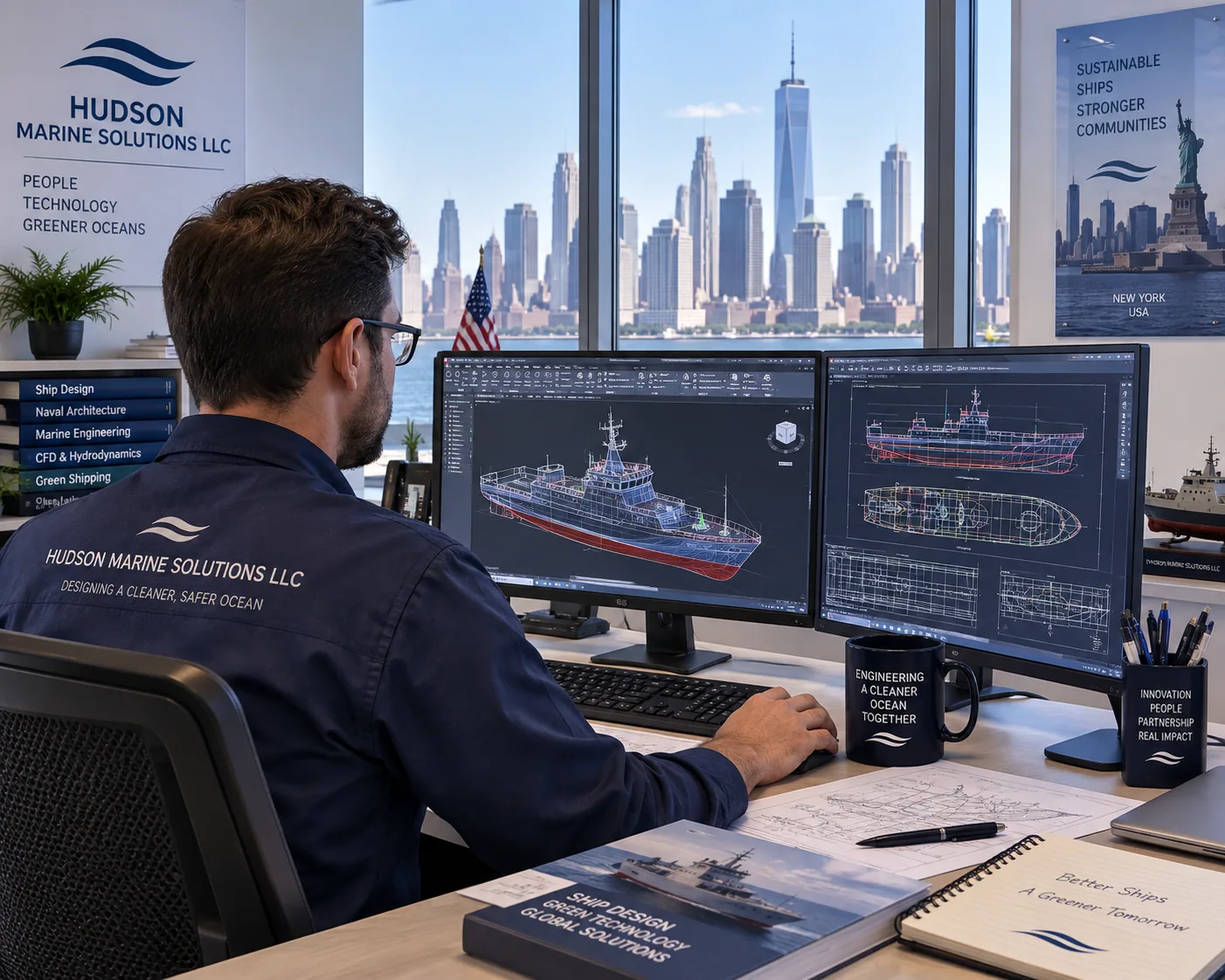
01 / GREEN SHIP DESIGN

Green Ship Design & Conversion Engineering

Efficient, buildable and future-ready newbuilds and conversions—from mission analysis and hull optimisation to production engineering.

Integrated naval architecture and marine engineering, supported by construction and conversion supervision at shipyards worldwide. One coordinated approach from the first operational requirement to vessel delivery.

Concept DesignBasic & Detail EngineeringCFD SupportClass Approval SupportWorldwide Supervision
Explore engineering capabilities
Mission-Led DesignBuildability · Performance · Lifecycle ValueNewbuild & Conversion Support Worldwide
Green Ship Design maritime engineering
From operational need to buildable vessel

Engineering that connects purpose, performance and production.

Hudson Marine Solutions LLC develops vessel designs around the owner's mission, operating environment, endurance, payload and commercial priorities.

Our scope covers special-purpose tugs, patrol vessels, OPVs, container vessels, service vessels and green ship concepts. For conversions, we assess the existing asset before defining a technically feasible and executable modification strategy.

  • Define the missionOperating profile, speed, endurance, payload, crew, port restrictions and service requirements.
  • Balance the designHull form, stability, structure, propulsion, machinery, electrical loads and arrangement interfaces.
  • Engineer for the yardConstruction methods, material availability, access, maintainability and production sequencing.
  • Prepare for the futureEnergy efficiency, hybrid options and alternative-fuel readiness with project-specific safety and approval assessment.
Our design capabilities

Designed around the mission.

Each vessel begins with the operating profile—speed, endurance, payload, bollard pull, survivability, port limits, emissions, maintainability and crew needs.

We translate these priorities into a coordinated design basis, balancing vessel performance with buildability, safety and lifecycle value. Requirements and specialist studies are tailored to each vessel's intended role.

WORKBOAT

Specialized Tugs

Mission-led tug design for harbour assistance, towing and support duties, balancing bollard pull, manoeuvrability, stability and safe deck operations.

  • Propulsion and towing-equipment integration
  • Duty-cycle and machinery-load assessment
  • Crew access, maintenance and working arrangements
SECURITY

Patrol Vessels

Patrol-platform engineering shaped by speed, endurance, seakeeping and crew requirements, with coordinated arrangements for owner-defined operational equipment.

  • Hull and propulsion performance assessment
  • Navigation and communications interfaces
  • Operational safety and equipment access
OFFSHORE SECURITY

OPVs

Offshore patrol vessel concepts balancing sustained operations, endurance, reliability and maintainability with the owner's mission and assurance requirements.

  • Seakeeping and long-duration habitability
  • Redundancy and survivability requirements coordination
  • Mission-equipment space, weight and service interfaces
COMMERCIAL

Container Vessels

Commercial vessel design matched to route economics, cargo capacity, port restrictions and efficient loading and operating arrangements.

  • Capacity, draft and stability trade-offs
  • Hull efficiency and machinery matching
  • Cargo arrangements and structural coordination
NEXT GENERATION

Green Ship Design

Integrated energy-efficient vessel concepts combining hull performance, propulsion and onboard power with practical fuel-transition pathways.

  • Hybrid, battery and shore-power options
  • Methanol and alternative-fuel readiness studies
  • Lifecycle emissions and investment assessment
SCIENCE & EXPLORATION

Research Vessels

Research-platform engineering around scientific payloads, endurance and safe survey operations, integrating owner-selected equipment with vessel systems.

  • Laboratory and survey-equipment arrangements
  • Deck handling and deployment interfaces
  • Station-keeping, noise and vibration requirements coordination
One mission-led approach across vessel types. Design targets, approval requirements and specialist verification are defined for each engagement. Alternative-fuel readiness does not by itself establish zero lifecycle emissions.
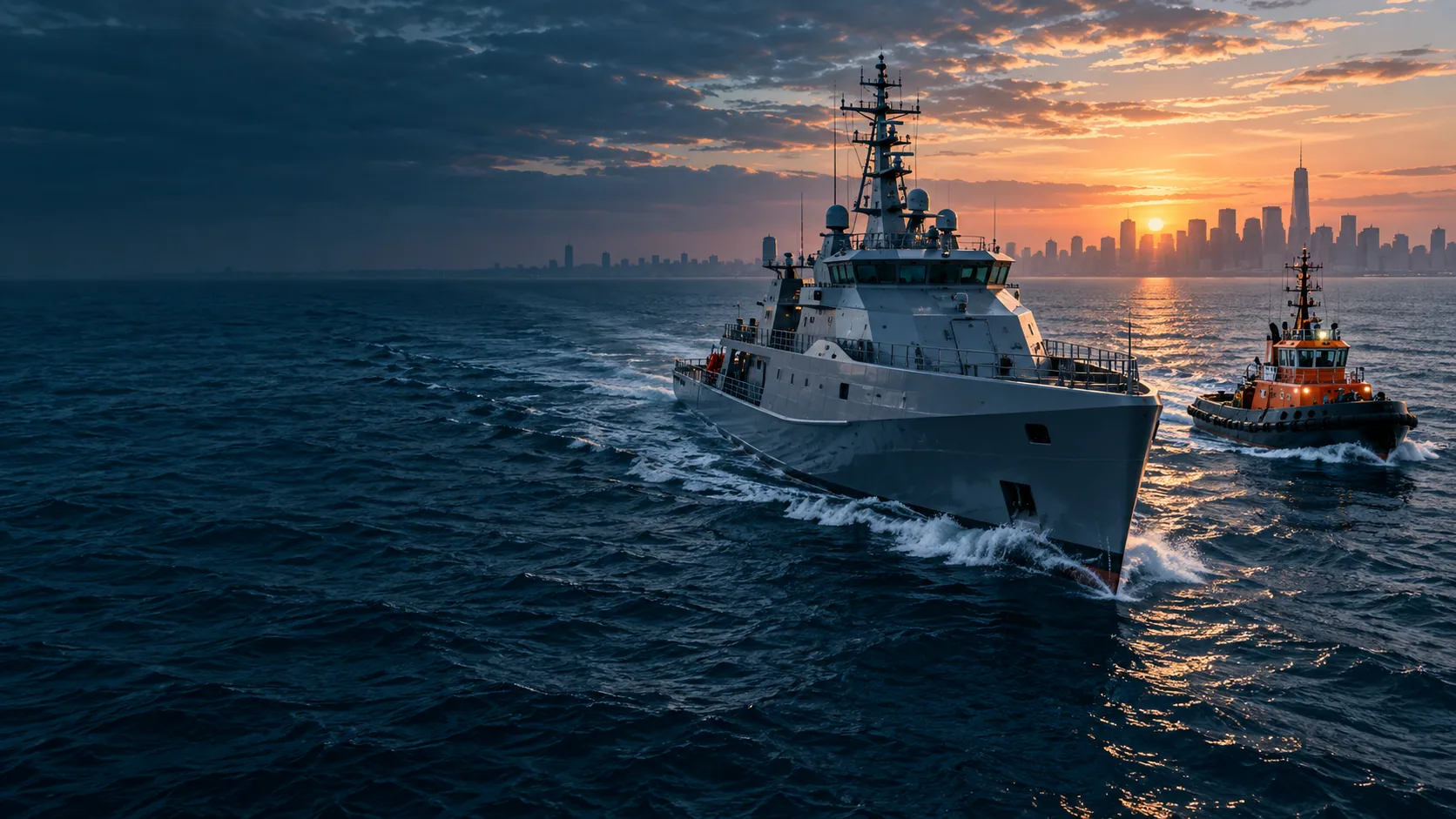
DESIGN & DELIVERY ENVIRONMENTS

Engineering at every stage of the vessel.

From vessel operation and digital design to technical support in the shipyard.

Integrated engineering services

Concept to construction. Conversion to renewed capability.

A coordinated design package reduces interface gaps between the owner, shipyard, equipment suppliers and approval authorities.

01 / CONCEPT

Mission Analysis & Concept Design

Establish a clear technical basis and compare viable vessel configurations before detailed investment.

  • Design basis and principal dimensions
  • Preliminary general arrangement
  • Payload, endurance and power estimates
  • Option comparison and design trade-offs
02 / NAVAL ARCHITECTURE

Hull Optimisation & Performance

Develop a hull and propulsion solution suited to the required operating profile.

  • Hull-form development and fairing
  • Resistance and speed–power assessment
  • CFD and model-test coordination
  • Propeller matching and seakeeping studies
03 / BASIC ENGINEERING

Structures, Stability & Systems

Translate the concept into coordinated technical arrangements and approval deliverables.

  • Scantlings and structural calculations
  • Weight, trim and stability assessment
  • Machinery, piping and electrical design
  • Safety plans and equipment specifications
04 / PRODUCTION

Detail & Production Engineering

Support fabrication and installation with practical, yard-aligned engineering information.

  • Workshop and assembly drawings
  • 3D coordination and interface checks
  • Outfitting and installation details
  • BOQs and material take-offs
05 / CONVERSION

Existing-Vessel Modification

Develop conversion packages based on as-built records, condition and the intended new role.

  • Arrangement and structural changes
  • Re-engining and propulsion integration
  • Fuel-system and energy upgrades
  • Revised stability and technical records
06 / APPROVAL

Class & Statutory Coordination

Prepare submissions and manage technical review interfaces throughout design development.

  • Applicable-rule and submission planning
  • Drawing and calculation packages
  • Comment tracking and technical responses
  • OEM and flag-administration coordination
Final class and statutory approvals are issued by the relevant authorities. Engineering studies, specialist analyses and production deliverables are defined in the agreed project scope.
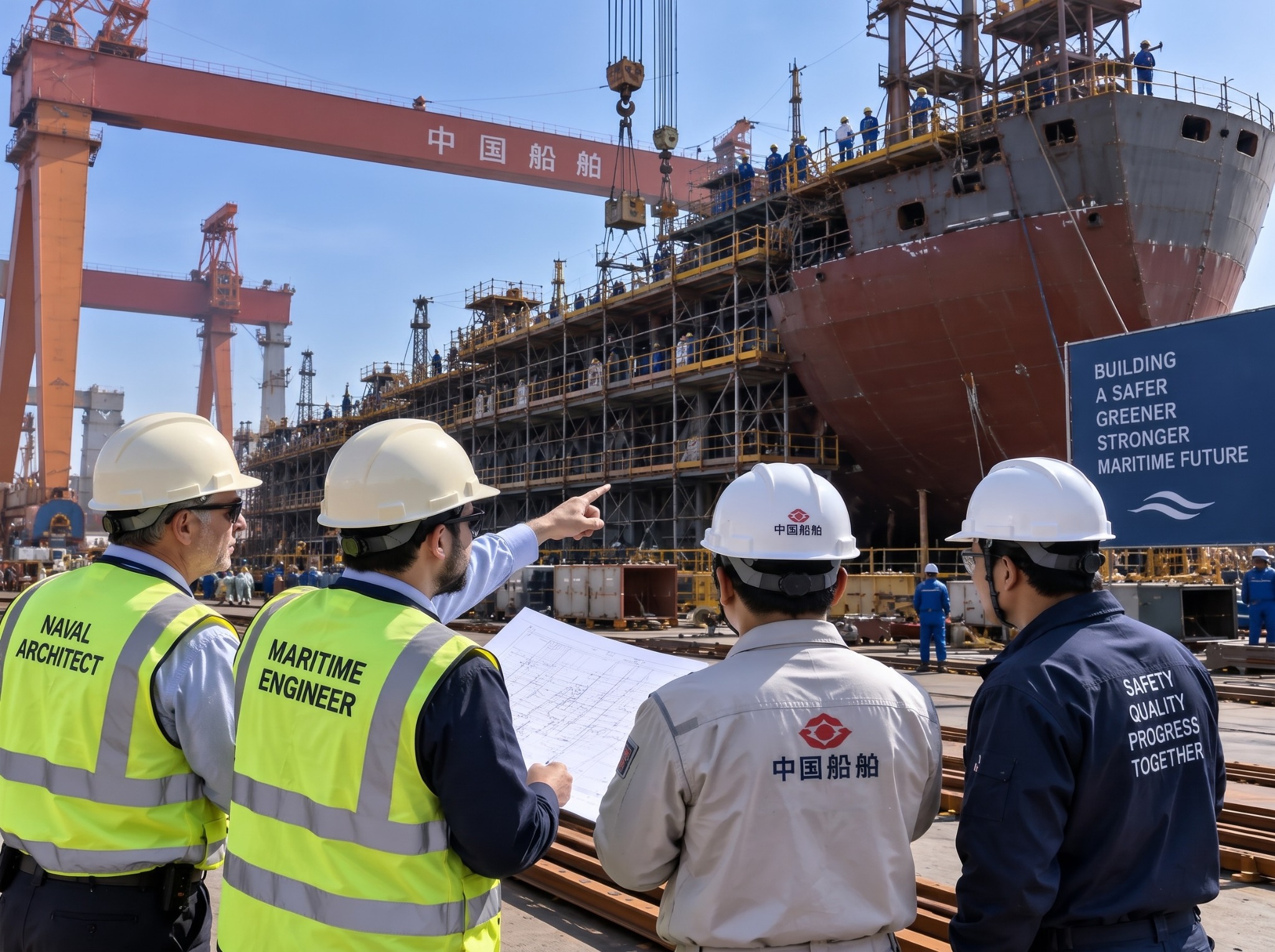
Worldwide construction & conversion supervision

Your technical interests represented wherever the vessel is built.

Construction and conversion supervision can be arranged at shipyards anywhere in the world—from resident site representation to milestone inspections and targeted technical visits.

We support owners with design-to-yard coordination, quality surveillance, progress reporting and technical issue resolution. Deployment is planned around the project location, yard access, local requirements and the agreed inspection scope.

Discuss global site support
  • Pre-construction & mobilisationTechnical specification review, inspection and test plans, quality checkpoints and reporting arrangements.
  • Hull fabrication & outfittingMaterial traceability review, fit-up and welding surveillance, NDT record review, dimensional checks and coating inspections within scope.
  • Machinery & system installationEquipment inspections, foundation and alignment checks, piping and electrical installation surveillance and interface coordination.
  • Factory, harbour & sea trialsFAT/HAT attendance, commissioning oversight, trial witnessing, performance review and defect-list follow-up.
  • Owner reporting & handoverProgress and quality reports, non-conformity tracking, technical punch-list closure and delivery-document review.
Independent owner support with clear responsibilities. Supervision supports the agreed contract and inspection plan; it does not replace the shipyard's workmanship obligations or the statutory duties of class and flag surveyors.
Project delivery framework

A disciplined route from brief to handover.

Defined stages and review gates help maintain design consistency, control changes and align engineering with the yard programme.

01

Define & Develop

Agree the mission and design basis; develop the concept and evaluate performance, arrangement and lifecycle trade-offs.

02

Engineer & Review

Coordinate basic and detailed engineering, supplier inputs and class or statutory submissions.

03

Build & Supervise

Support production, inspect agreed milestones and manage technical queries and design changes.

04

Test & Deliver

Support commissioning and trials, resolve technical findings and compile the agreed handover records.

Project-ready deliverables

Clear engineering. Traceable decisions. Coordinated execution.

Deliverables are tailored to vessel type, contract requirements and construction or conversion complexity, with agreed responsibilities and document-control procedures.

Design & Approval Packages

Design basis, arrangements, calculations, system schematics and submission registers.

Production Information

Fabrication and installation drawings, specifications, BOQs and interface details.

Supervision & Quality Records

Inspection reports, progress updates, technical queries and non-conformity registers.

Trials & Delivery Documentation

Trial procedures and reports, punch lists, updated drawings and handover-document review.

Start your design project

Share the mission. Let’s shape the vessel.

Provide the vessel type, operating requirements, principal constraints, intended shipyard and delivery schedule. For a conversion, include available drawings and machinery particulars. For worldwide supervision, share the yard location, build programme and required site coverage.

Prepare a project enquiry
↑